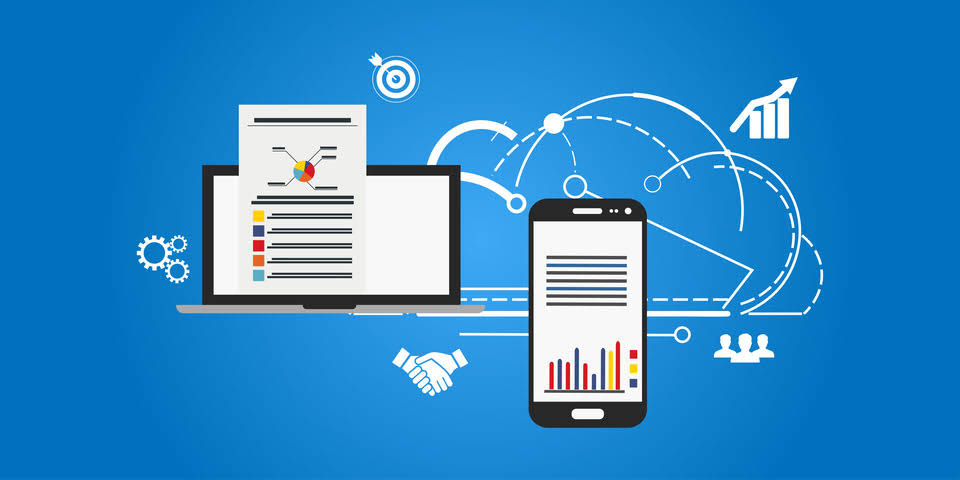
Emerging technologies such as blockchain also make the three-match system more efficient by performing the verification, payment, and auditing process in one step. As an added benefit, the time and money that would be spent on the manual labour to review and match the documents can be allocated to other needs. Put simply, 3-way matching is making sure that the prices and quantities on the original purchase order, invoice, and receipt are all identical. Let’s dive deeper into the components and process of the 3 way match to understand its significance in accounting and financial management. Cloud Technology is expected to become the primary medium for three-way matching.

Sign up for the latest purchasing and procurement content
- She verifies that the item descriptions match exactly, the quantities align across all documents, the prices are consistent, and the dates fall within acceptable timeframes.
- By verifying what was received from the vendor, the buyer can either approve the invoice as submitted or negotiate discounts related to variances.
- If all the details across the three documents match, the accounting department proceeds with processing the payment to the supplier.
- These three steps ensure the buying process is transparent and fair for everyone involved.
- Overall, three-way matching is essential for any business that wants to ensure accuracy and efficiency regarding invoice and purchase order processing.
They manage invoice coding, spot payment fraud, build approval summaries, and process vendor payments through cards—no manual work needed. OCR achieves 99% accuracy on line-item data, while invoice processing runs 2.4x faster than older AP systems1. This ensures data consistency and eliminates manual data transfer across the “3 way matching accounts payable” process. Three-way matching represents an accounting process that helps ensure your business never pays a fraudulent invoice. This process involves matching the invoice with the relevant purchase order and the receiving report.
A Robust Safeguard Against Fraud

You don’t have to use Ramp’s other products to get value from Bill Pay—it’s a complete AP solution on its own. But if you’re looking to manage bill payments, card spending, employee expenses, and procurement all in one system, Ramp also makes that possible. Use Ramp Bill Pay as 3 way matching your standalone AP system, or connect it with Ramp’s corporate cards, expense reimbursements, and procurement workflows for unified financial oversight.
Step 1: Purchase Order Creation and Approval.
Organizations can leverage data insights to track supplier performance, identify workflow bottlenecks, and optimize accounts payable processes. Customizable reporting features provide tailored insights, facilitating data-driven decision-making and continuous process improvement. This method provides greater assurance that the invoice reflects actual goods or services received, reducing the risk of overpayment and fraud. However, it is more time-consuming and requires accurate and timely recording of goods receipts. Three-way matching is an advanced process that compares the invoice and purchase order to the goods receipt note (GRN). It involves verifying that the goods or services billed in https://vibrancegroup.ae/absorption-rate-calculating-the-absorption-rate-in/ the invoice match both the PO and the GRN, confirming that the items were received as ordered.
What Is Three-Way Matching in Accounts Payable?
Two-way matching refers to a process where the invoice details are verified against the corresponding purchase order for price and quantity. It helps avoid discrepancies and verifies if payments are made only for goods or services actually ordered. A car manufacturer wanted to a order 200 lithium-ion batteries and have them delivered to his plant. The manufacturer shared a purchase order for 200 batteries at a cost of Rs.7,250. The shipment arrived in three weeks time and the vendor shared an invoice for Rs.15,04,000. The accounts payable team conducted 2-way matching before inputting the invoice into the system to notice a difference of Rs.54,000.
- By diligently following the 3 way match process, organizations can maintain financial accuracy, prevent overpayments, and ensure that they only pay for the goods or services they have received.
- This process is important for large purchases or purchases with newer vendors, but businesses may choose not to use three-way matches for small or recurring purchases.
- It’s the process of collecting, cleansing, classifying, and analyzing expenditure data to decrease procurement costs, improve efficiency, and monitor compliance.
- A tolerance limit is the percentage variation that a company finds acceptable between the purchase order and what is received/billed.
- A four-way match is a special type of invoice matching most often applicable to regulated industries and businesses with very high standards for accepting goods from a manufacturer or supplier.
- From lost invoices to late payments and less-than-stellar payables visibility, manual 3-way invoice matching can put any finance department in jeopardy.
B2B Payments
- Timely notification of issues during the 3-way match of sales, 3-way match of receiving, 3-way PO match, or 3-way invoice match, ensures that payment to suppliers is done on time.
- When an invoice falls outside these tolerances, it’s flagged for review.
- It cuts down the time spent on matching by simply looking at the quantity and amount for each of the two documents.
- By verifying the information across three different documents, companies can maintain control over their financial transactions and ensure that they are in line with their business objectives.
- A company can adapt these methods to suit its specific purchasing process.
- The goal here is to ensure that financial details (order quantity, order amount, total amount, PO number etc.) match across all 3 documents.
- This financial control ensures that companies only pay for goods and services ordered, received, and billed correctly.
In this article, we’ll explain how 3-way matching works, its benefits, and how automation can enhance your accounts payable process. By diligently following the 3 way match process, organizations can maintain financial accuracy, prevent overpayments, and ensure that they only pay for the goods or services they have received. This process also helps build trust and strong relationships with suppliers, as it demonstrates a commitment to fair and transparent financial practices. Check out how you can implement Bellwether’s 3 way matching system for your business.
- By verifying that the purchase order, order receipt, and supplier’s invoice match, you know that an invoice is valid and correct before paying it.
- Typically, companies receive paper or e-mail invoices prior to receipt of goods, which delays document processing and validation, since the three-factor match has to wait until delivery.
- Flag mismatches and routes them to the right stakeholders with context, speeding up resolution and reducing time-to-payment.
- So far we talked about understanding your current processes and design of a 3-way process.
Automation of the 3-way matching process helps speed up payment cycles, making it easier to process invoices. With 3-way matching automation, businesses can reduce manual errors, prevent delays, and improve workflow efficiency in the accounts payable department. The 3 way matching process in accounts payable is a critical control method used by organizations to Bookkeeper360 Review ensure invoice accuracy and legitimacy.